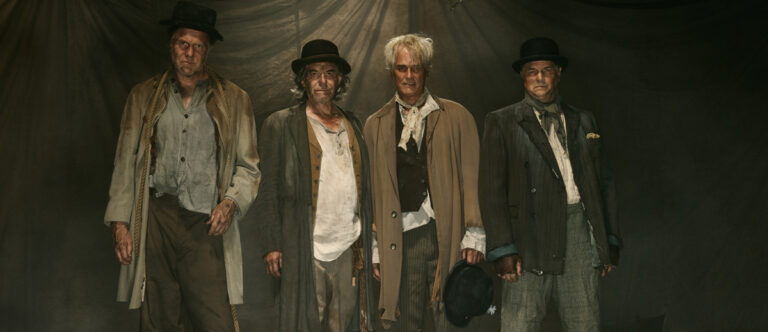
Kaufman devises and directs dark ‘Here There Are Blueberries’
By ALAN SMASON, WYES-TV Theatre Critic (“Steppin’ Out”)
Here There Are Blueberries by Moisés Kaufman and Amanda Gronich has much to say to today’s audiences. In an era of rising antisemitism and, at a time when so many of the younger generations fail to understand the depth of depravity and inhumanity by the Nazis, there is a need to remind them of the horrors. With so few survivors left at this juncture to tell their personal stories, Holocaust memory depends today on institutions and the survivors’ own second and third generations to remember for us.
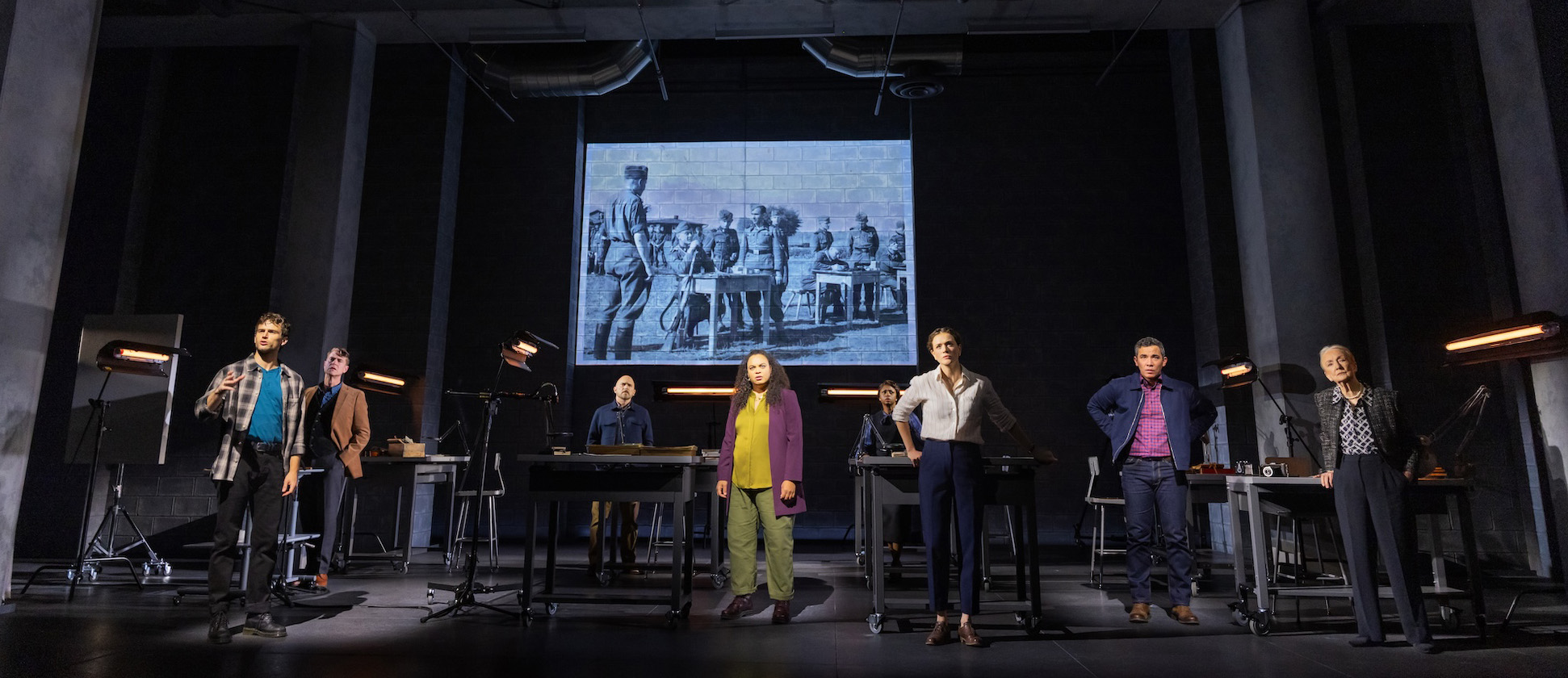
The conceit used to draw us into this play is an album of photos serendipitously saved and kept for more than six decades that is donated to the U. S. Holocaust Memorial Museum. The curators of the museum are the main characters who painstakingly research the images and determine the answers to a great many questions including who owned the album, who is seen in the photos and what they have to say to us as observers.
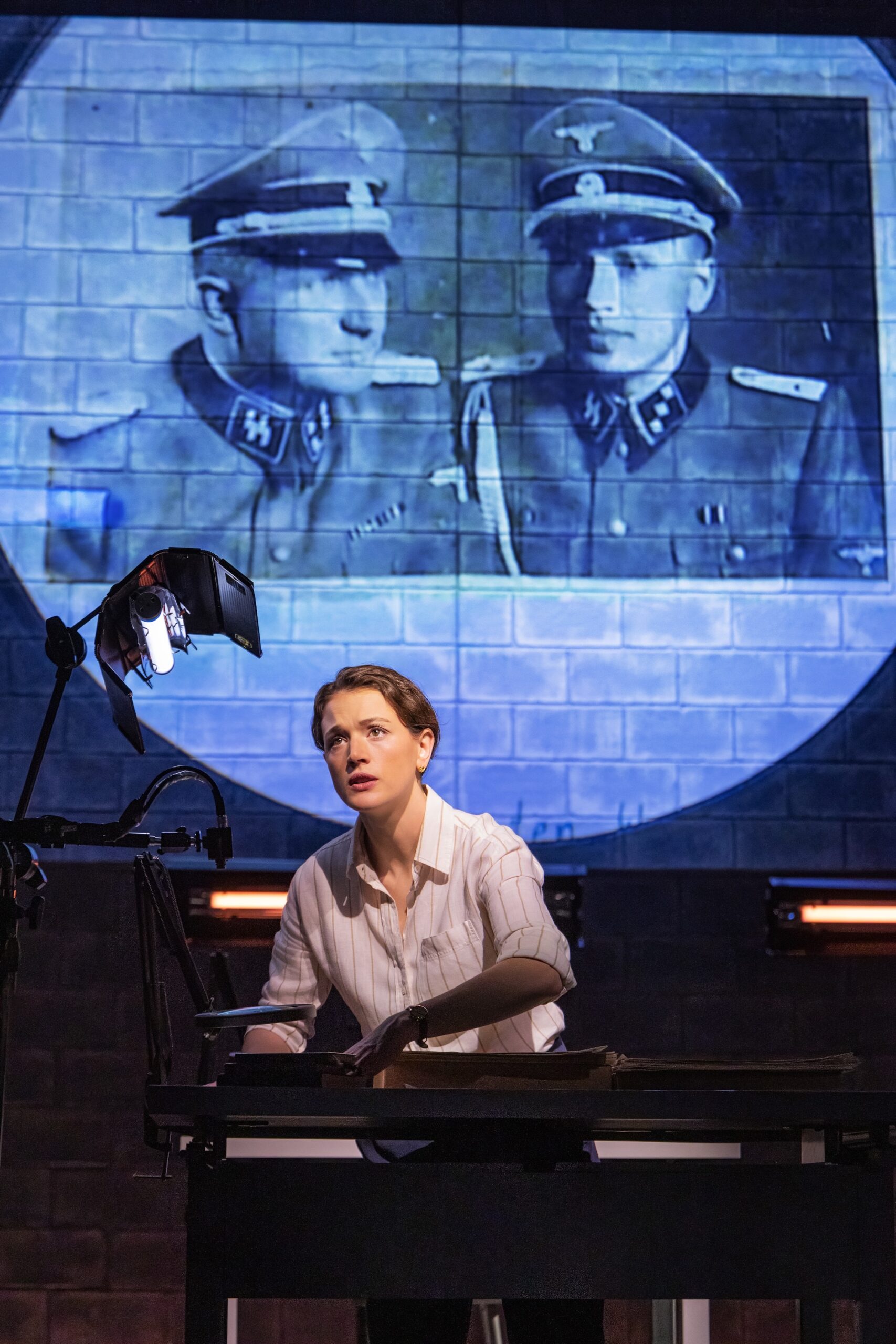
Delia Cunningham greets us in her role as Rebecca Erbelding, an associate curator at the museum in Washington, D.C., Initially, Erbelding is the central focus of this slow-moving investigation. Almost immediately, she is startled to recognize many of the faces contained within it are those at the highest levels of administration at the Auschwitz-Birkenau complex. Who owns this album? Why are there so many infamous faces in it?
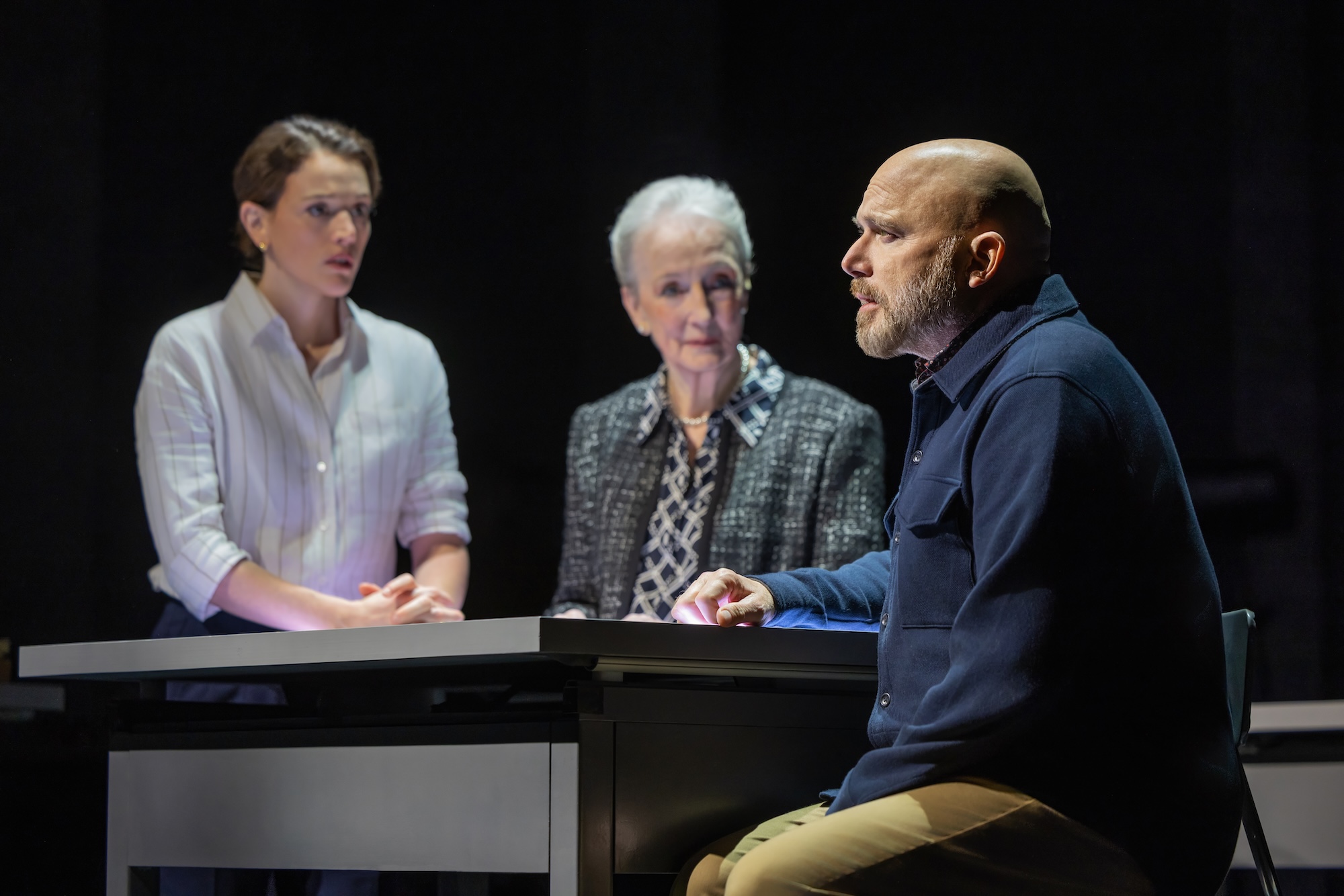
Conceived and directed by Kaufman, the play is informed by an ensemble cast. Each of the actors also portrays a number of secondary characters including survivors or their descendants who are interviewed in the slow process of research or by each other. It is through the curators’ unyielding quest for answers that the names of the rogues gallery pictured in the photographs and the time and place for each of the shots are ascertained.
While the Nazis carried out unspeakable acts that killed millions, they were extremely careful not to leave photographic evidence behind of their misdeeds. This album, the property of a high-level SS adjutant to the Auschwitz commandant, yields the very first photographic evidence that Dr. Josef Mengele, the so-called “Angel of Death,” was ever at the death camp. The more the curators delve into the images, the bigger the villains they find. In short, these are the architects for “The Final Solution” dealing with “The Jewish Question.”
it begs a question. If the museum’s curators are responsible to stay true to their mission and honor the memories of those unfortunates loss to the Holocaust, how are they serving them by doing research on their killers?
Kaufman originally developed and devised Here There Are Blueberries at his Tectnonic Theatre Company. He meticulously directs this modern-day detective story with the actual images of the photos projected by designer David Bengali at the rear of the stage. As the curators speak about a specific figure or figures as, their image is highlighted to reinforce to whom they are referring. In order to carry the maximum effect, Kaufman has deliverately kept the stage lighting by David Lander as deliberately dim. Sound design by Bobby McElver and scenic design by Derek McLane are also minimalist, adding to a bare stage with little to take away from the impact of the photos.
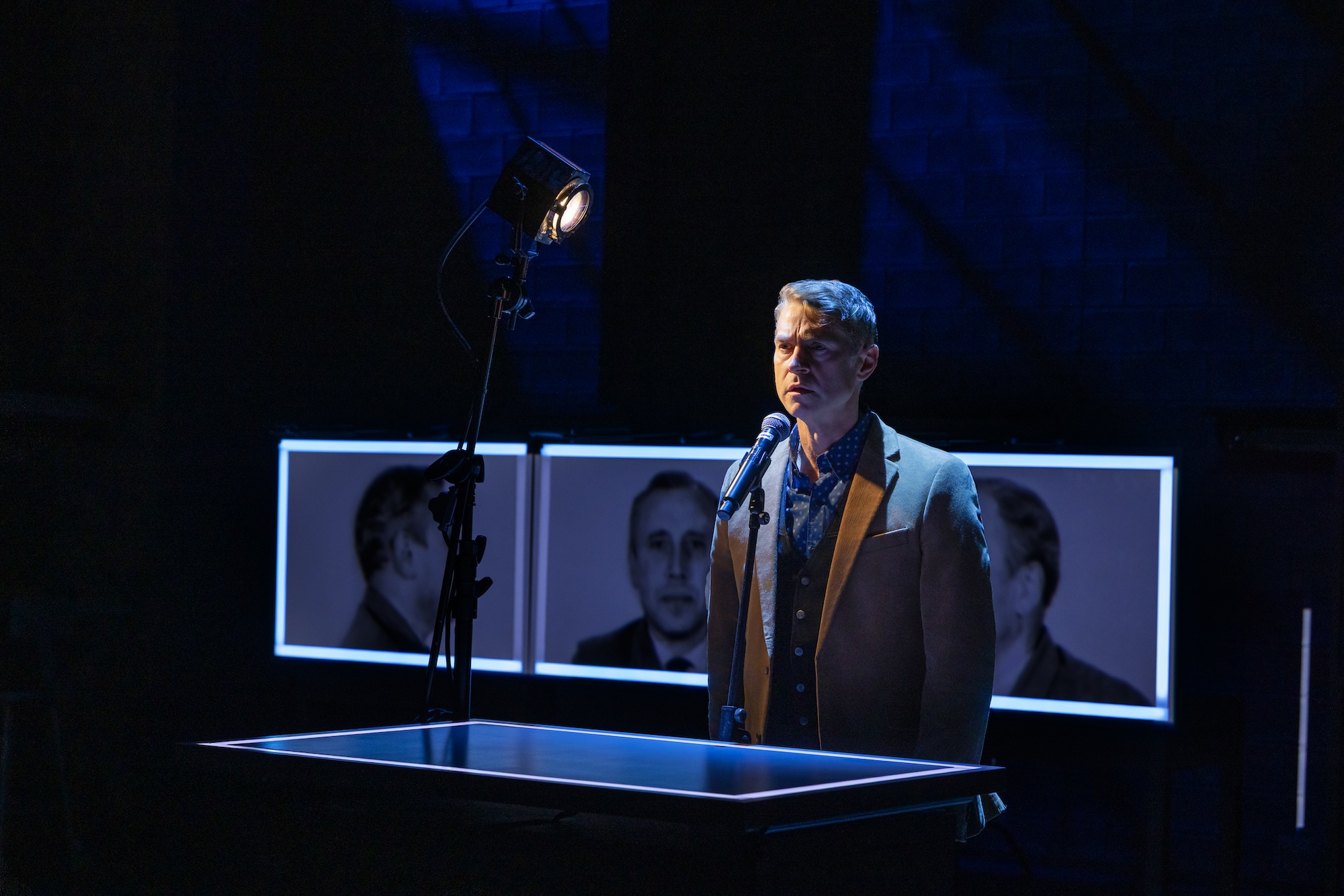
Scott Barrow portrays the album’s owner, Karl Höcker. Michael Cerveris portrays Peter Wirths, the son of the notorious chief doctor at Auschwitz. Brandon Flynn portrays Rainer Höss, the grandson of the chief architect of the death camps. Conrad Ricamora plays Tilman Taube, a grandson of a former Nazi, who recognizes his grandfather’s photo in the album. Kathleen Chalfant takes on the role of chief curator of acquisitions Judy Cohen. Michelle Beck portrays Charlotte Schüenzel, a clerical and communications worker at the camp complex, while Montego Glover performs as Melita Maschmann, a former girl member of the Hitler Youth.
The most unusual aspect of Here There Are Blueberries is the almost humdrum aspect of the photos in the album. They turn out to be “selfies” of an egotistical nature belonging to a forgettable top-level adjutant to the Auschwitz camp commandant. But the world has never seen photos like these and we are not sure how to react.
The photos stand as silent sentinels to the atrocities committed by the Nazis but they are unable to link the victims with the perpetrators. It is up to the curators to peel away the layers of disconnect and to attest to the troubling complicity everyone who is pictured had in the killings of hundreds of thousands. Should we marvel at the skills of the curators who are able to comb through the detailed records of the Third Reich and determine specific dates, times and places? Or should we be repulsed by their malevolence?
What the play teaches is that the camera lens can only capture what it sees. It cannot discern good from evil. It cannot determine guilt or innocence. What the album’s contents show is that rank and file members of society can become part of a murderous regime and justify their roles as small in scope and hardly up to scrutiny. The pictures are not the arbiters here. The curators know better, though.
Most of Here There Are Blueberries does not address the actual killings of more than one million victims that took place at the Auschwitz-Birkenau complex between 1940 and 1945. We know the answers to a great many questions, but we still cannot fathom why they were so easily able to separate themselves from the suffering going on literal footsteps away from their workplace.
At play’s end we especially know that the depiction of the Nazis as murderous beasts is not at all accurate. The camera lens has revealed them as happy people who smile and pose at every opportunity. Whether they are top SS officers or switchboard operators and secretaries eating blueberries in the field, they are all complicit, but the camera cannot discern any malevolence on their parts. It begs the question about all of us. Would we be capable of carrying out the same kind of murderous campaign and still be comfortable in our own skin?
This is a play that resonates with its audience, scene after scene and image after image.
As famed photographer Karl Lagerfeld once said, “What I like about photographs is that they capture a moment that’s gone forever, impossible to reproduce.” And sometimes they are also impossible to explain.
Here There Are Blueberries“(1 hour and 30 minutes with no intermission) continues its limited Broadway run through January 10, 2027 at the Ethel Barrymore Theatre, 243 W. 47th Street. For tickets through Telecharge, click here.