National non-Equity ‘Book of Mormon’ tour goes on weeklong mission to Miami
By AARON KRAUSE
I recently witnessed the non-Equity, national touring production of The Book of Mormon at the Adrienne Arsht Center in Miami from June 9-14. Here are some observations:
This musical matters today because it reminds us that religion doesn’t have to be dogmatic and it also highlights the power of storytelling, belief, community, and connection.
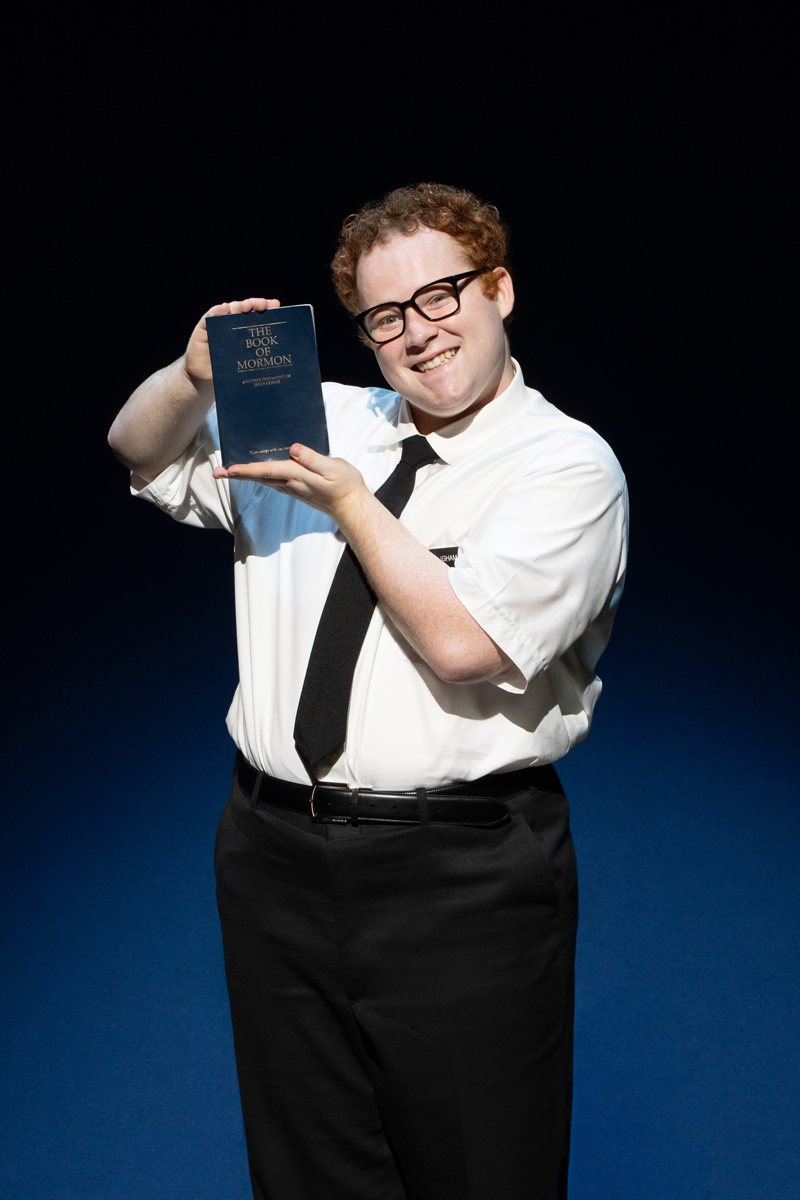
Jacob Aune radiates childlike excitement as Elder Cunningham. He seamlessly alters his voice to mimic characters from popular culture and emits high-pitched laughs. Aune isn’t afraid to appear silly or hyper, speaking quickly and channeling the energy of an overcaffeinated frat-house man-child. But at other times, he is sincerely comforting, particularly when he sings to Elder Price, “Sleep now, little buddy, put your cares away. Tomorrow is a Latter Day.”
While Aune’s Cunningham begins as an insecure follower, he grows into a more confident and likable leader by the end. He summons courage during “Man Up,” even growling through parts of the song as smoke shoots from lighting instruments, visually reinforcing the fire Cunningham discovers within himself.
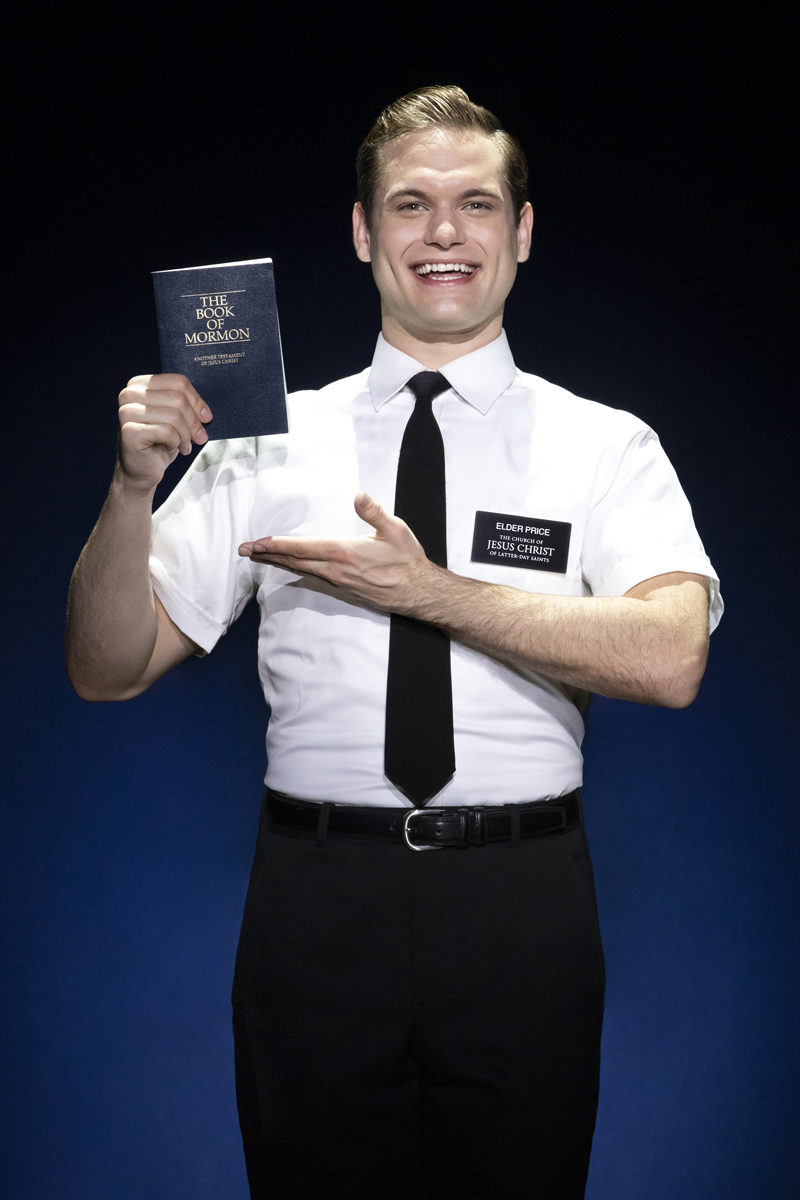
Ethan Davenport believably imbues Elder Price with sunny enthusiasm and self-assuredness, playing the role of leader to Elder Cunningham’s follower. He rises at just the right moment, as if to underscore his self-importance, during the playful and comedic “You and Me (But Mostly Me),” a parody of earnest “I Want” songs from classic Broadway musicals. Davenport’s Price is similarly full of conviction during the stirring, high-energy “I Believe,” which reaffirms the character’s devotion to Mormonism. He sings with joy and sincerity, conveying Price’s unwavering faith.
Davenport is equally animated when Price talks about his seemingly obsessive dream of going to Orlando. During such moments, he resembles a wide-eyed kid at Disney World itching to ride every roller coaster. Contrastingly, he widens his eyes in horror during the playfully dark “Spooky Mormon Hell Dream.” Here, he resembles a trapped wild animal in a fever-dream landscape populated by skeletons, pitchforks, and appropriately red lighting. With his shirt untucked and smeared with blood, Price flees like a panicked cat or desperate fugitive when things become difficult.
Davenport convincingly charts Price’s arc from confident and self-centered to a more humble, faithful servant who learns that religion is more about helping people than achieving personal glory. As a pair, Davenport and Aune share strong chemistry as the lead characters. Mild tension exists between them at times, but there is also obvious affection. At one point, they share a meaningful embrace, and toward the end, Price, Cunningham, and Nabulungi join hands in solidarity.
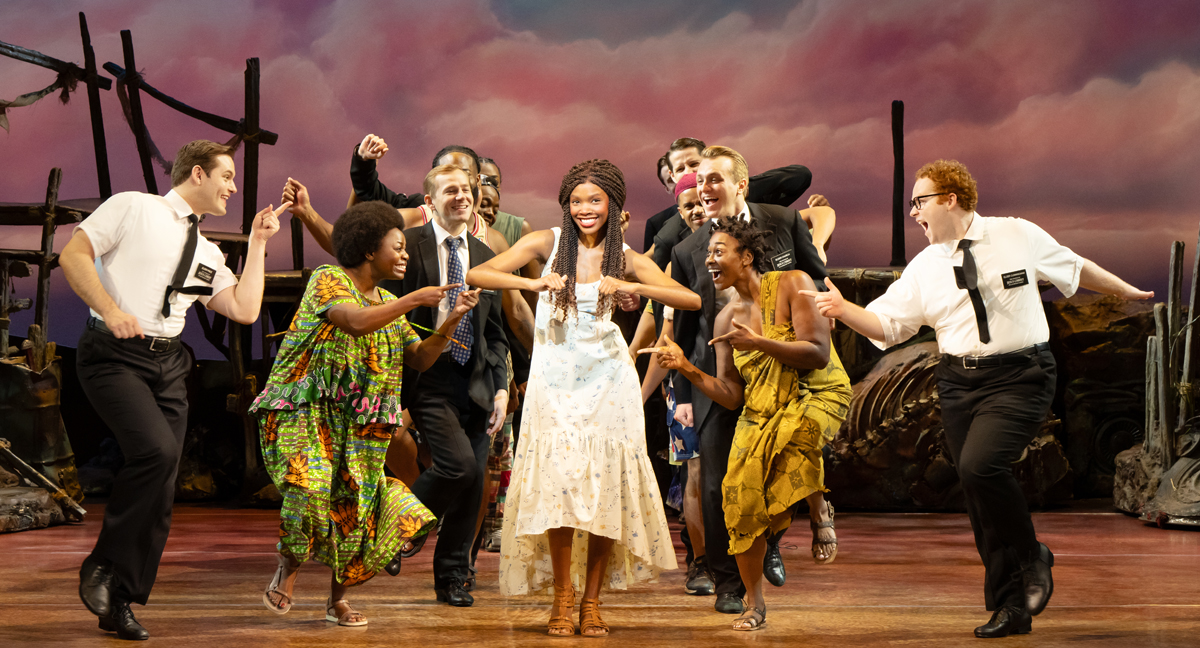
Life may be hard for Nabulungi and her fellow villagers in northern Uganda, but Charity Arianna lends the young woman an eager, infectiously optimistic verve that suggests she carries hope even amid despair and dictatorship. That optimism is especially evident when Arianna’s spirited Nabulungi, who has a pep in her step, sings the longing ballad “Sal Tlay Ka Siti.” The song’s title is a foreign mispronunciation of Salt Lake City, the Utah city that houses Mormonism’s global headquarters. Nabulungi may be desperate for a better home, but Arianna fills the song with such brightness that the character seems able to envision the place as a perfect paradise.
While parts of the number are humorous—Nabulungi imagines Salt Lake City as a place with “fountains of juice” and “no suffering”—Arianna’s rendition is also moving. It illustrates the character’s seemingly unshakable conviction that a better future awaits. That sincerity makes her later frustration all the more affecting. At one point, an angry Nabulungi slams an object to the ground when the village men refuse to listen to Elder Cunningham. Clearly, she has grown weary of their hopeless negativity.
Jarius Miquel Cliett conveys a welcoming benevolence as Nabulungi’s father, Mafala Hatimbi, the village leader who warmly greets Elders Price and Cunningham when they arrive on their mission. Cliett’s Hatimbi is also protective of his daughter, instructing her in a sharp voice to stay inside, away from General Butt-F—ing Naked (a formidable Shafiq Hicks), who threatens to cut off the villagers’ genitals if they do not comply with his demands.
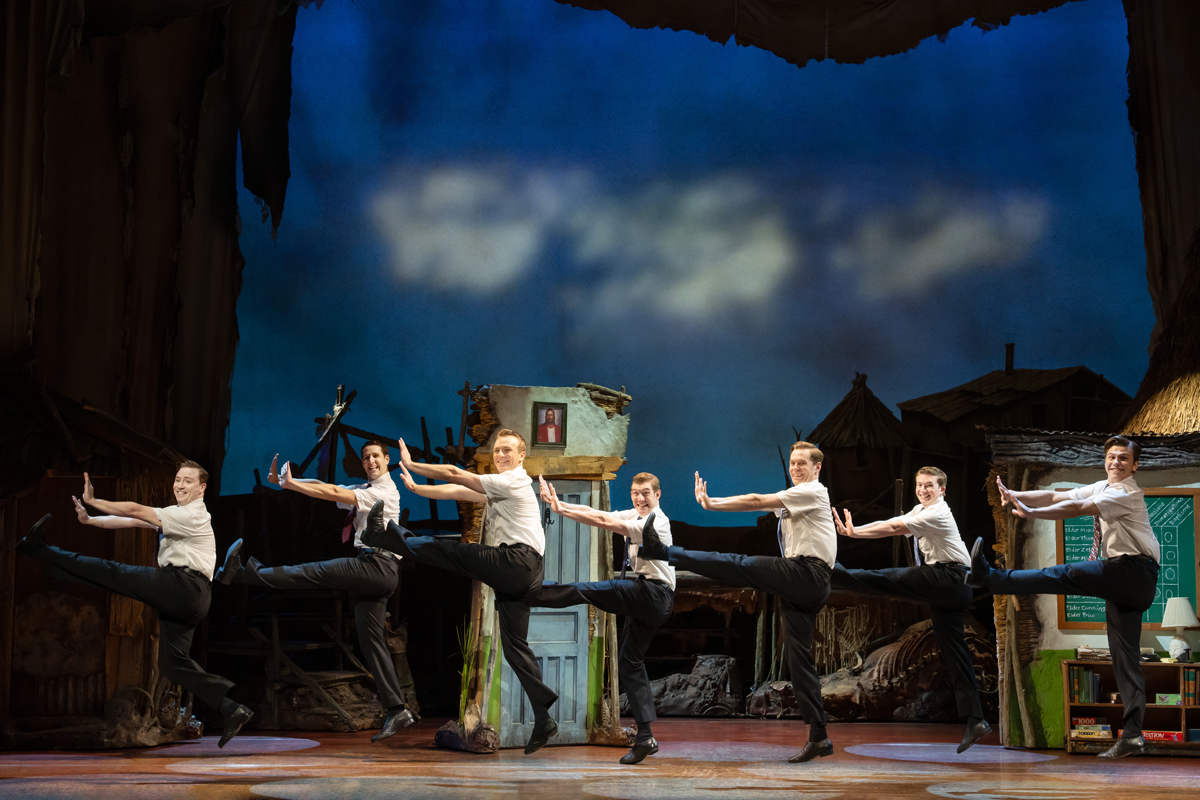
As Elder McKinley, Jay Martin nails the show’s satirical portrait of emotional repression in “Turn It Off,” a number that mocks the suppression of difficult feelings within institutional religion. The tone is appropriately dark and severe as it touches on grave and taboo subjects, yet Martin captures the humor in McKinley’s sudden shifts into buoyant cheerfulness as he and the other missionaries insist that such feelings can simply be shut away “like a light switch.” While the song’s treatment of homosexuality and emotional repression may feel dated to modern audiences, it ultimately serves the musical’s broader satirical critique.
As director, Jennifer Werner steers this non-Equity national touring production toward a gleefully comic interpretation of The Book of Mormon that honors the satire while also allowing more serious material to land. The energy never flags, the pacing is just right, and the ensemble achieves a cohesion that keeps the production scintillating, balancing satire and sincerity. The kinetic choreography, with moves such as spins, kicks, and lifts, is appropriately upbeat, matching the production’s prevailing mood.
Ultimately, The Book of Mormon is a comic delight that reminds us that true belief doesn’t have to conform to rigid, dogmatic constraints of organized religion and that you can believe in the power of live theater while having gentle fun with it.
For more information about The Book of Mormon’s non-equity national tour, visit the tour’s website.