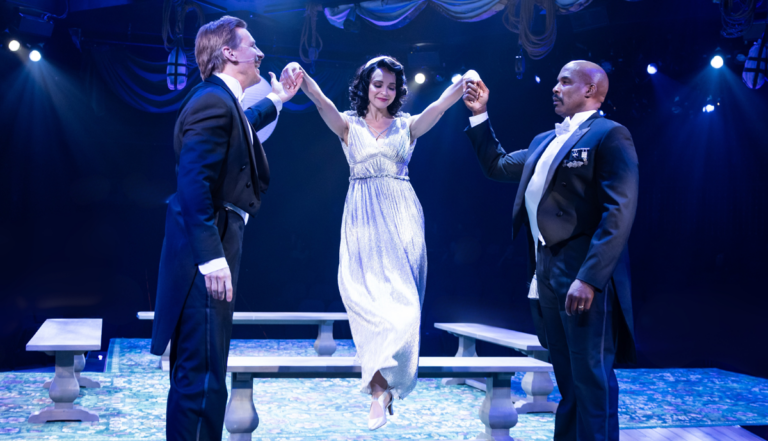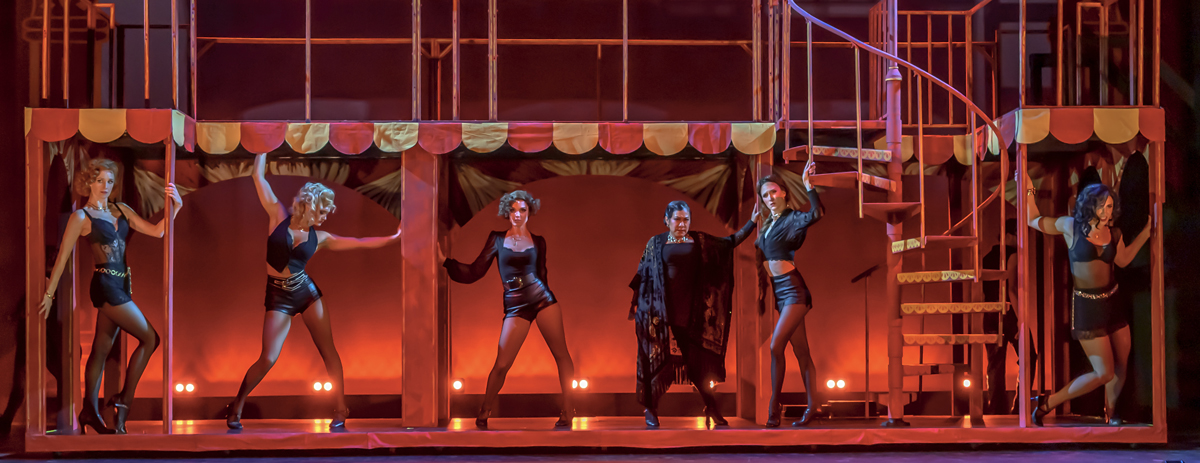
SLT’s ‘Chicago’ flawlessly directed by Jauné Buisson
By ALAN SMASON, WYES-TV Theatre Critic (“Steppin’ Out”)
When John Kander and Fred Ebb first premiered Chicago, they must have thought they had bad timing. That’s because with Gwen Verson, Chita Rivera and Jerry Orbach as stars and Bob Fosse as the director, they had clearly stacked the talent deck and surely figured they would win multiple Tony Awards.
But they could not have envisioned a cast of relative unknowns in a very different kind of musical written by an unproven Marvin Hamlisch would sweep the Tonys that year with A Chorus Line and leave them with nothing to show for Chicago. Though the show failed to win a single Tony Award, to its credit Chicago still ran for more than two years and 936 performances.
When the revival of Chicago debuted in 1996 with Bebe Neuwirth, Ann Reinking and James Naughton as its stars, neither Kander or Ebb could have figured their musical would go on to become the longest running American show in Broadway history and currently occupy its place as the second longest running musical of all time.
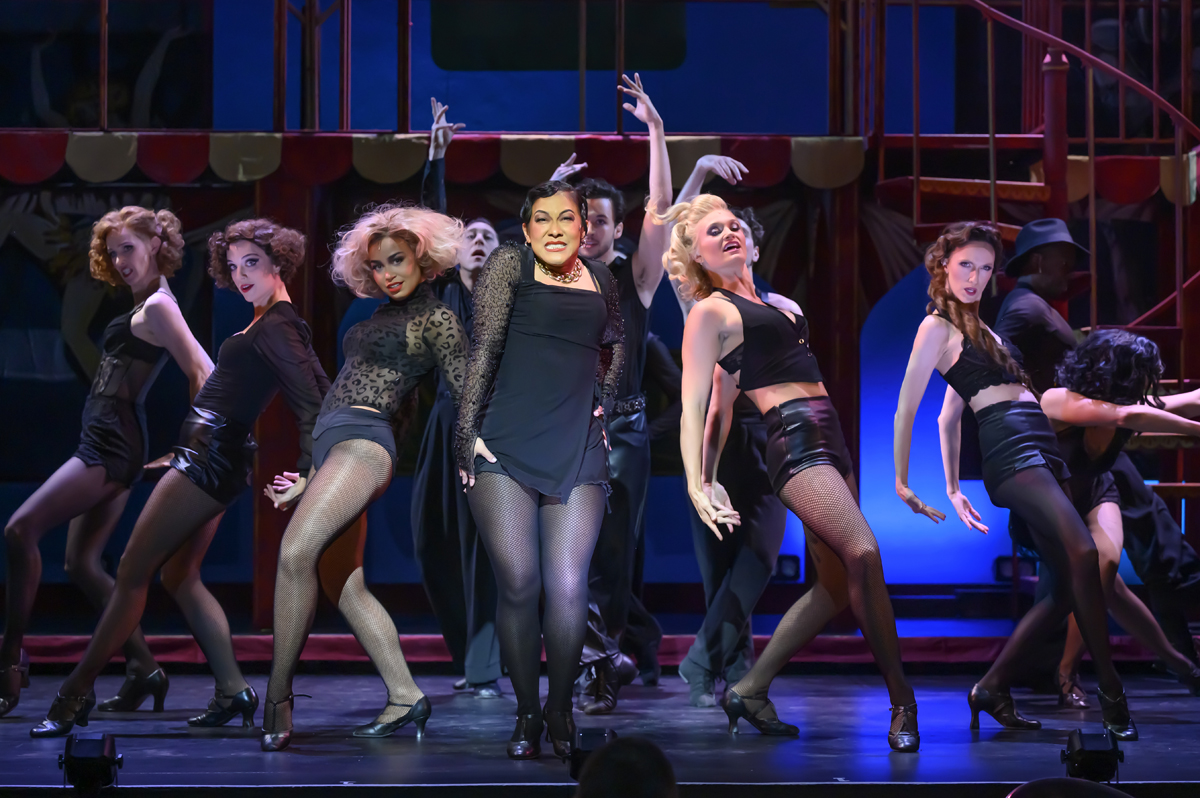
So, clearly, Chicago is a beloved institution. Knowing its history and current status as a perennial favorite on the Great White Way, director Jauné Buisson knew she had a challenge when mounting the first show of Summer Lyric Theatre at Tulane’s 2026 season. She had to meet all the expectations the show would garner from those that had seen it on earlier occasions but also put something extra into it to showcase her own talent in telling the sordid tale of murder and merry mayhem. To her credit, she did just that.
For her Velma Kelly, she chose Chase Kamata, a talented New Orleanian from a legendary family with deep cultural roots in the culinary and musical arts, to rise and take on the role. The opening refrains from the muted trumpet and the spirited opening of “All That Jazz” led by her invite the audience members into the time of Prohibition a century ago when jazz was hot, the gin was cold and the smoke from a recently-discharged pistol didn’t necessarily mean that justice would ensue.
Kamata was featured in several major selections including as one of the merry murderesses in the “Cell Block Tango” uttering the phrase “Cicero,” the scene of her celebrated double murder. Her earlier work across multiple worldwide stages served her well as she took on a role she had known her whole life but had never had an opportunity to play. Several songs like “I Can’t Do It Alone” and “When Velma Takes the Stand” give her a chance to strut her stuff both solo and with backing support. Also quite good are her Act Two duets of “Class” and “Nowadays.”
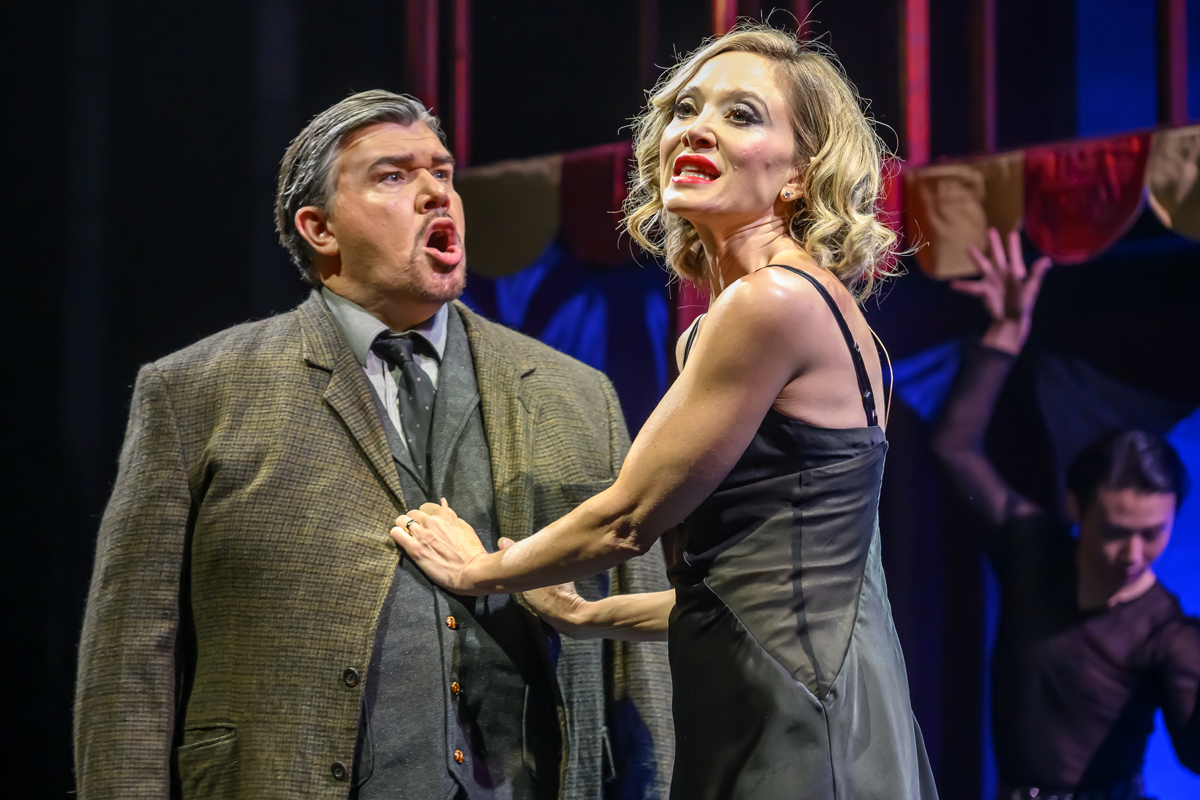
But while Velma was the first of the murdering madams we witnessed, the star of Chicago was without any doubt Roxie Hart. Roxie was played by veteran Broadway, TV and film performer Julie Tolivar and she played the role as few others could. Her affair with Fred Casely (Frank von Hoven) is short-lived, just like her lover and ends badly with several shots and a “whoopee!” Her first solo number was “Funny Honey,” which introduced us to her husband Amos Hart, played convincingly by Sean Patterson, but left little doubt as we watched her move from her perch high above to stage level that she owned the song, delivering a near perfect performance.
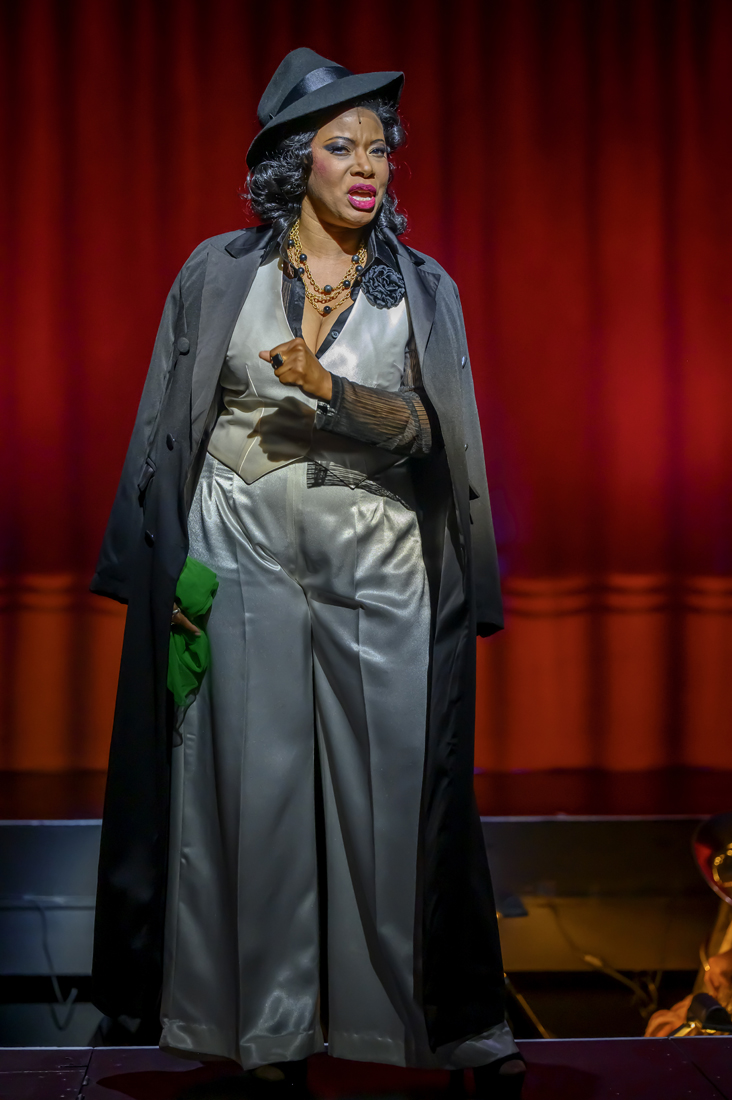
Tolivar’s moves were a joy to behold as she shone in Act One’s “Roxie,” a biographical look back at her character and the “I wanna” song prevalent in so many great musicals. Roxie Hart wanted to be famous and if she couldn’t do it by being a famous figure in show business, then she’d do it by being an infamous murderer. In the days of Prohibition in Chicago, the public ate up these kinds of scandals or so we are led to believe in the book by Ebb and Bob Fosse.
Taking advantage of her position of authority was Matron “Mama” Morton, played with finesse by Idella Johnson. In her introductory number, “When You’re Good To Mama,” Johnson played the opportunistic jailer to a tee. With her bold and brassy voice, she clearly identified how she took care of busines for her girls – and herself. Mama had no problem helping any one of the inmates in her pen, but it always came with a price.
While Mama worked her magic on the inside of the penitentiary, it was attorney Billy Flynn who knew how to work the system and arrange that all of the girls got off, or at least were proven not guilty at trial. Chris Carey was perfection as he oiled himself onto the stage surrounded by a harem of ladies holding large pink plummage. His introductory number “All I Care About” was about as good as the role can be played. Being at home in the leading actor category, Carey’s rich tenor carried high above the backing chorus.
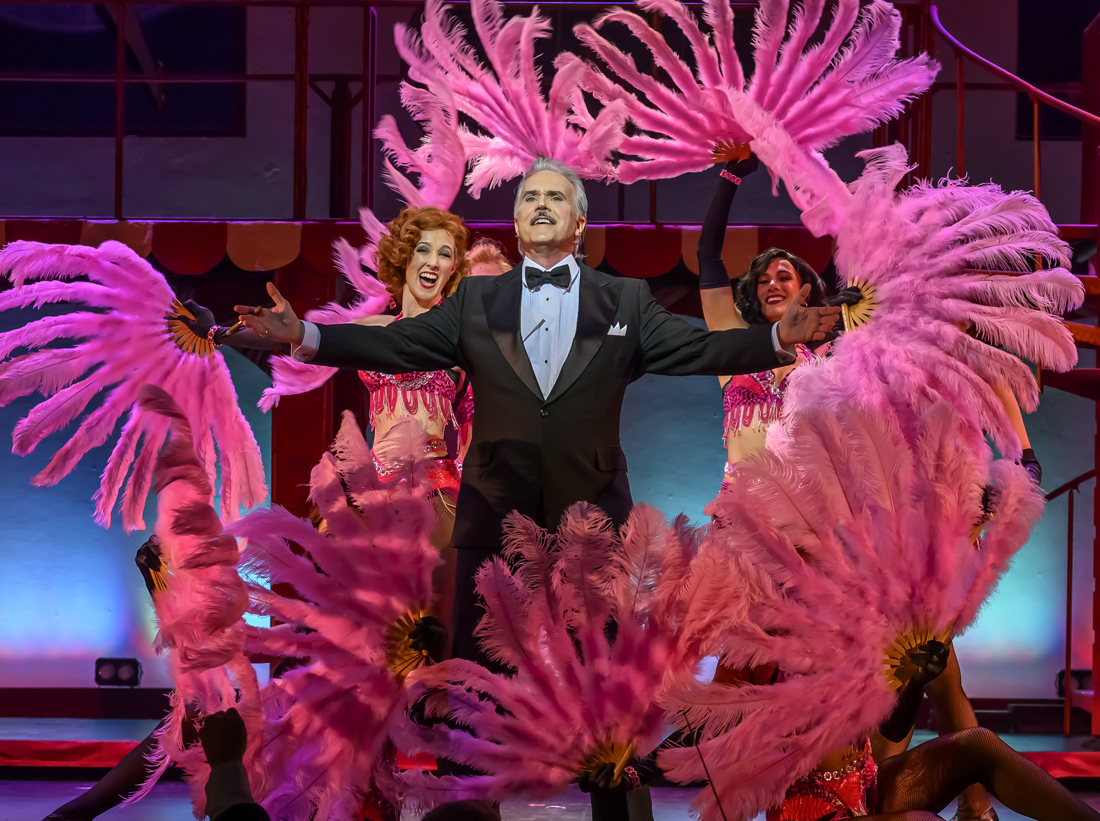 Flynn knew every dirty trick in the book and for $5,000 he made sure to use every one needed to appeal to the empaneled members of the jury. He tells Roxie not to worry, but most importantly not to do any of the real talking in “We Both Reached for the Gun” as Tolivar moves her mouth and Billy supplies all the dialog. When appealing to the press, Flynn contacted Mary Sunshine, played by A. Brewer. The reporter promised to let her readers know all of the inside scoop on Roxie’s case that Flynn fed her.
Once the trial got underway, it was time for Flynn to rise to the occasion and in “Razzle Dazzle” his voice soared as he asked, “How can they see when they have sequins in their eyes?” Carey momentarily stole the thunder from leading stars Tolivar and Kamata in that one number.
Sean Patterson did cover the role of Amos Hart as few others would or could and the repartee he and Carey shared as Roxie’s husband was especailly humorous. In “Mister Cellophane” he had his one moment to shine but he chose to stay in character as “unimpressive, undistinguished you know who. ”
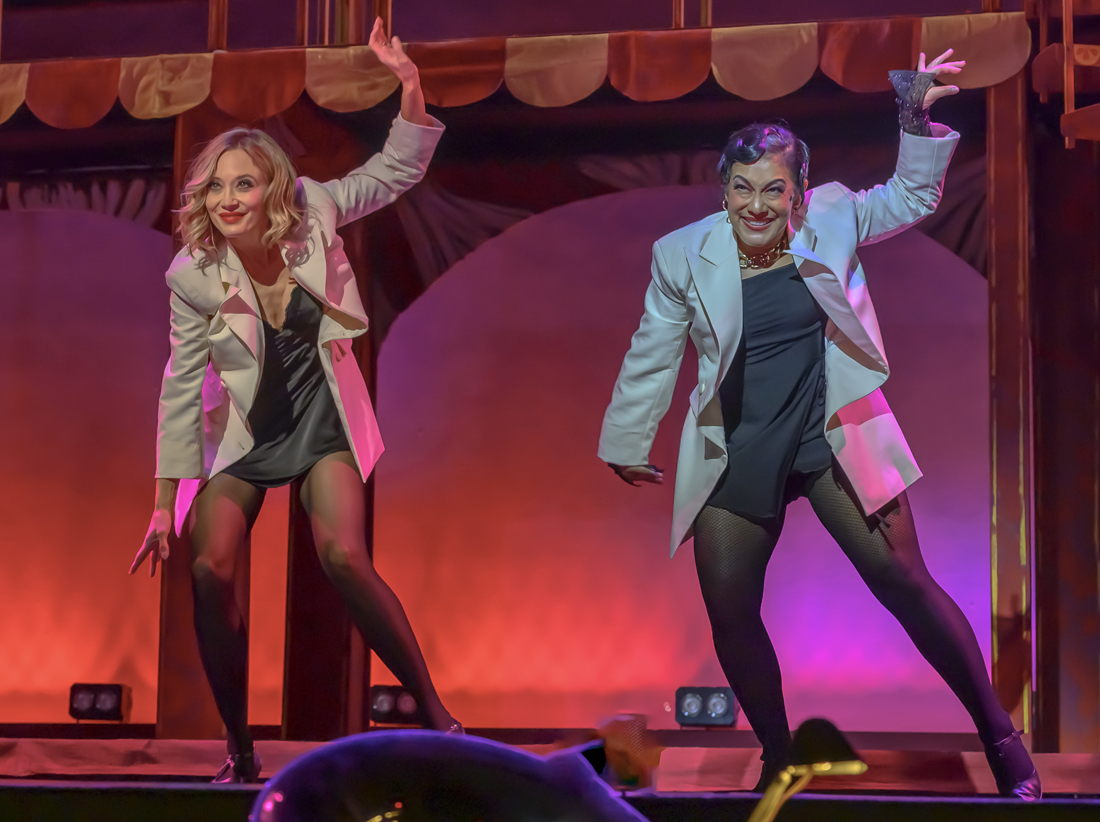
Daniel Rigamer also deserved special recognition as the members of the jury enduring quick changes throughout the course of Roxies trial. Rigamer also is credited as the sound designer for the musical.
Tolivar and Kamata got to finish the work together with the back-to-back gifts that were “Nowadays” and the Fosse-choreographed “Hot Honey Rag.” When the now late Reinking worked on the revival, she did so retooling the choreography “in the style of” her former boyfriend. But she left in the original Fosse choreography for the ending piece just prior to the finale and both Tolivar and Kamata clearly enjoyed being put through their dancing paces for that instrumental number designed to capture the spirit of the Jazz Age.
Roger Grodsky conducted the orchestra with authority and also served as the production’s music director. Daniel Zimmer did an outstanding job on lighting with major kudos for special lights in “Roxie Hart” and the finale. The set design by Destany Gorham was good but the costume designs by Erick Sundquist and wigs and makeup by Laurin Hart were all superb.
The run of Chicago by John Kander and Fred Ebb and directed by Jauné Buisson ran at Summer Lyric Theatre at Tulane from June 18 – 21.
‘